
Varahi Maa, also worshipped as Varahi Amman in South India, is one of the most powerful and mysterious forms of the Divine Mother in Sanatan Dharma. She is revered as a fierce yet compassionate goddess associated with protection, spiritual authority, destruction of negativity, and deep tantric wisdom.
Varahi Devi is traditionally identified as the Shakti (divine feminine energy) of Bhagwan Varaha, the boar incarnation of Vishnu. Just as Varaha Bhagwan lifted Bhudevi from cosmic darkness, Varahi Maa is believed to uplift devotees from ignorance, fear, obstacles, hidden enemies, and spiritual confusion.
She occupies a highly respected place in multiple traditions including:
- Sri Vidya
- Shakta Tantra
- Sapta Matrika worship
- Kaula traditions
- South Indian Amman worship traditions
- Tantric upasana sampradayas
In many tantric traditions, Varahi Maa is considered the commander-in-chief of the divine army of Lalita Tripura Sundari. She is often called:
- Dandanatha
- Dandanayaki
- Senanayaki
- Maha Varahi
- Vartali
- Panchami
- Ashvarudha Sahachari
- Ajnachakreshwari (in certain esoteric interpretations)
Unlike many gentle forms of Devi worship, Varahi Sadhana is traditionally considered powerful, secretive, and highly disciplined. Many of her advanced mantras and tantric practices are passed only through Guru initiation (Diksha).
Who is Varahi Amman?
Let’s talk about everything you need to know about Goddess Varahi Maa.
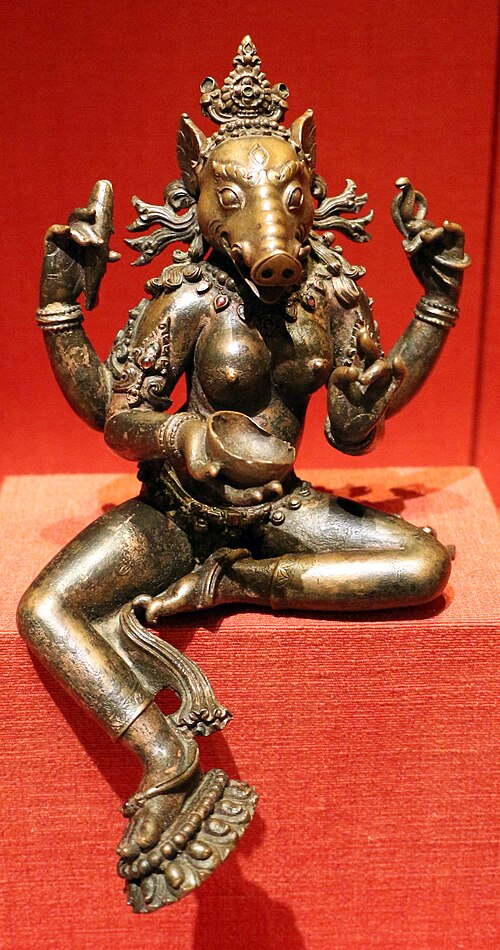
The Divine Feminine Power of Varaha
Varahi Maa is the feminine manifestation of the Varaha avatar of Bhagwan Vishnu. Her boar-faced form symbolizes immense strength, fearlessness, grounding energy, and the ability to remove deep-rooted darkness.
In Hindu spiritual symbolism, the boar is not viewed negatively. Rather, it represents:
- The ability to dig beneath illusion
- Power to uncover hidden truth
- Protection of Dharma
- Stability and earth energy
- Fierce removal of tamasic forces
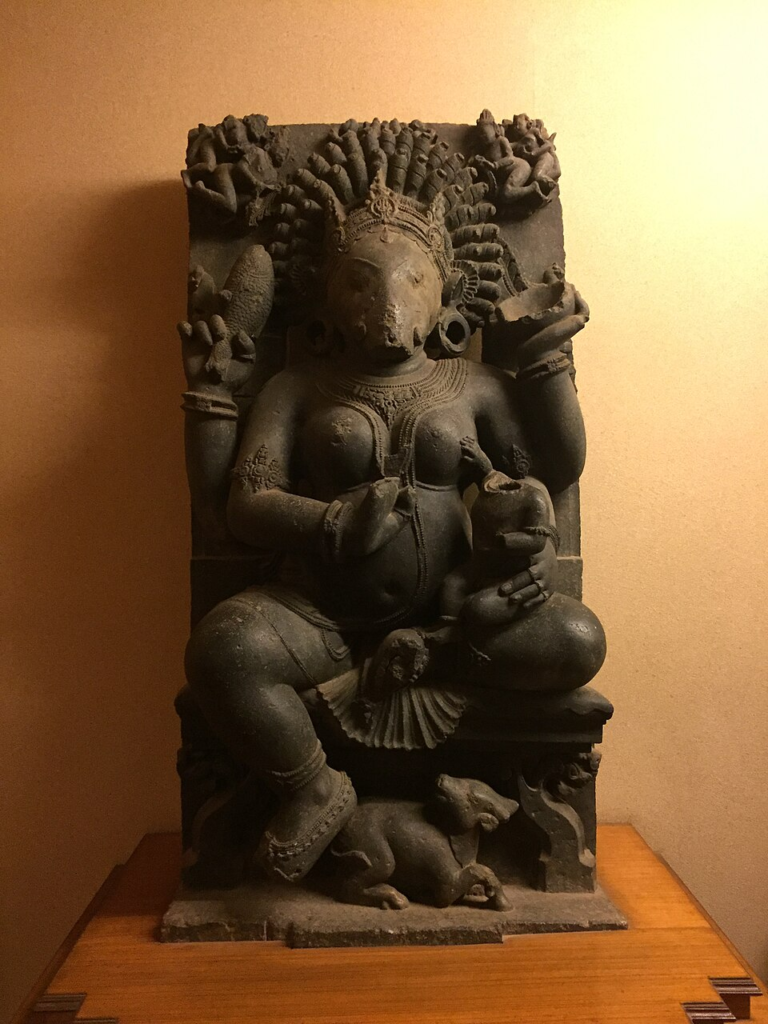
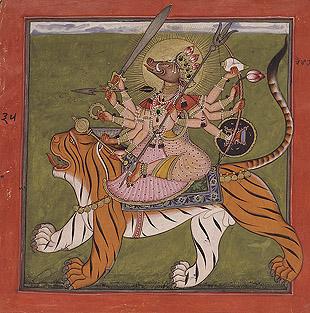
Varahi Devi is usually depicted with:
- A boar face
- Dark or reddish complexion
- Weapons such as plough, sword, danda, noose, or shield
- Seated on a buffalo, boar, lion, or corpse depending on tradition
- Fierce but protective expression
Her appearance varies across sampradayas and tantric texts.
Varahi Maa as the Commander of Lalita Devi
In Sri Vidya traditions, especially in the sacred narratives of Lalitopakhyana from the Brahmanda Purana, Varahi Devi plays a major role in the battle against demonic forces led by Bhandasura.
She is described as the commander of the divine armies of Lalita Tripura Sundari.
In this spiritual interpretation:
- Lalita Devi represents the supreme divine consciousness.
- Varahi represents disciplined spiritual power and divine command.
- The demons symbolize egoic tendencies, ignorance, attachment, anger, and inner obstacles.
Some Sri Vidya practitioners interpret this symbolically through the chakra system:
- Lalita is associated with Sahasrara.
- Varahi is linked with Ajna Chakra, the command center.
- She governs discipline, direction, and inner spiritual authority.
Varahi is also called Dandanatha.
The word “Danda” literally means staff, authority, or discipline. Some tantric interpretations connect it symbolically with the spine and the energetic structure of the subtle body where chakras reside.
These interpretations vary by sampradaya, and such teachings are traditionally understood under the guidance of a Guru.
Varahi Maa Among the Sapta Matrikas
Varahi Devi is one of the revered Sapta Matrikas (Seven Divine Mothers), who are:
- Brahmani
- Maheshwari
- Kaumari
- Vaishnavi
- Varahi
- Indrani
- Chamunda
The Sapta Matrikas are worshipped as powerful cosmic feminine energies who assist in maintaining Dharma and protecting the universe from negative forces.
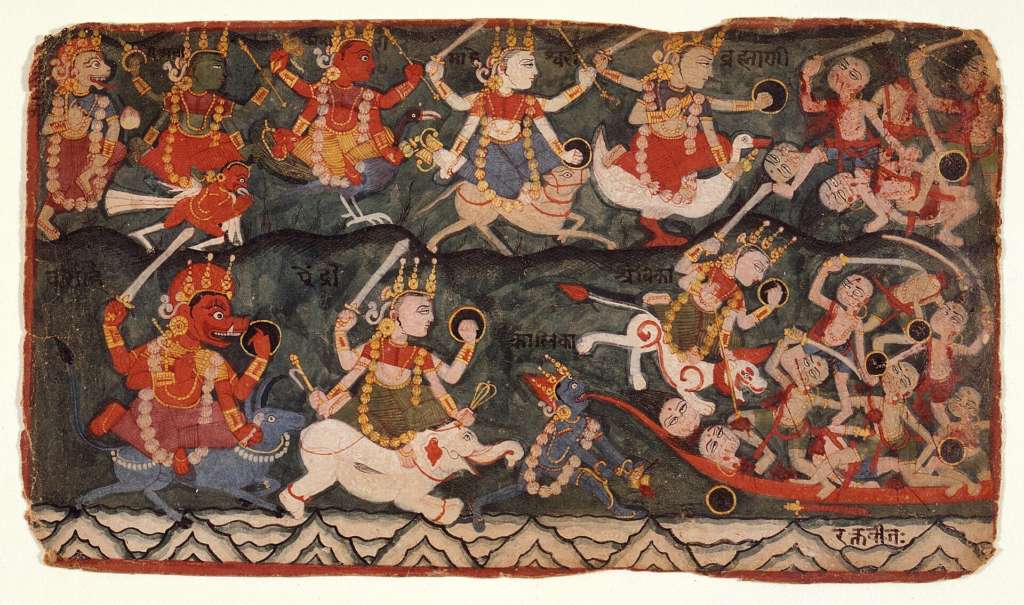
Among them, Varahi is often associated with:
- Protection from enemies
- Removal of black magic and negativity
- Authority and leadership
- Night worship traditions
- Tantric spiritual practices
Names of Varahi Maa
Varahi Devi is known by many sacred names across traditions.
Popular Names of Varahi Maa
- Varahi
- Maha Varahi
- Varahi Amman
- Dandanatha
- Dandanayaki
- Panchami
- Vartali
- Senanayaki
- Kirata Varahi
- Swapna Varahi
- Unmatta Bhairavi Sahachari
- Aadi Varahi
Different forms and names may have distinct mantras, yantras, rituals, and spiritual significance.
Legends of Varahi Maa
Varahi Maa in Lalitopakhyana
One of the most important references to Varahi Devi appears in the Lalitopakhyana, a sacred section of the Brahmanda Purana.
The Battle Against Bhandasura
According to the sacred narrative:
- Bhandasura was a powerful asura born from the ashes of Kama Deva.
- He gained immense strength and troubled the Devas.
- The Divine Mother Lalita Tripura Sundari manifested to restore cosmic balance.
- Varahi Devi became one of the chief commanders of her divine forces.
In the battle:
- Varahi destroyed powerful demonic armies.
- She protected the celestial forces.
- She used divine weapons and fierce energy to remove negativity.
Many Sri Vidya practitioners interpret this battle not only as a cosmic war but also as an inner spiritual journey where the seeker overcomes ego and ignorance.
Varahi as the Shakti of Varaha Avatar
Another important traditional understanding identifies Varahi as the feminine power of Bhagwan Varaha.
Just as Varaha Bhagwan rescued Bhudevi from cosmic waters, Varahi Devi symbolizes:
- Restoration of spiritual balance
- Protection of Dharma
- Lifting devotees from darkness
- Stabilizing the mind and life force
This aspect makes her deeply connected with earth energy and grounding spiritual practices.
Varahi and the Sapta Matrika Tradition
In Devi Mahatmya and other Shakta traditions, the Matrikas emerge to assist the Divine Mother in battles against asuric forces.
Varahi manifests from the power of Varaha and participates in the destruction of evil forces threatening cosmic harmony.
In temple traditions, the Matrikas are often worshipped together for protection and spiritual strength.
Worship of Varahi Maa
Nature of Varahi Worship
Varahi worship ranges from simple devotional prayer to highly advanced tantric upasana.
Different traditions worship her through:
- Temple worship
- Kumkum archana
- Sri Vidya rituals
- Night worship
- Yantra worship
- Mantra japa
- Homa
- Rahasya puja traditions
Her worship is especially prominent in:
- Tamil Nadu
- Andhra Pradesh
- Telangana
- Karnataka
- Kerala
- Nepal
- Sri Vidya traditions across India
Important Note About Tantric Practices
Varahi Devi is considered a tantric goddess in many traditions.
Because of this:
- Many mantras require Guru Diksha.
- Certain rituals should never be attempted without guidance.
- Advanced tantric worship involves strict discipline and purity rules.
Out of respect for traditional paramparas, many secret mantras and procedures are intentionally not publicly reproduced in full detail here.
Authentic practices should always be learned from a qualified Guru or sampradaya.
Best Days to Worship Varahi Maa
Different traditions follow different timings and observances.
Commonly associated worship timings include:
- Panchami Tithi
- Ashada month traditions
- Friday worship
- Night worship in tantric traditions
- Navaratri
- Rahasya puja timings in Sri Vidya
Practices vary greatly by sampradaya.
Varahi Maa Mantras
Varahi Moola Mantra
Several forms of Varahi Moola Mantras exist in tantric traditions. However, many of them traditionally require initiation.
Therefore, advanced mantra forms are generally not openly published in traditional lineages without permission.
Devotees may instead worship through:
- Nama japa
- Simple stuti
- Temple prayers
- Devi Mahatmyam recitation
- Lalita Sahasranama
- Guided worship under Guru supervision
Varahi Gayatri Mantra
Some traditions chant forms of Varahi Gayatri for devotional worship. However, pronunciation and method are important.
It is advisable to learn the mantra from an authentic source or Guru.
Varahi Maa Stotras and Sacred Texts
Varahi Dvadasha Namavali
The Dvadasha Namavali contains twelve sacred names of Varahi Devi.
Devotees recite it for:
- Protection
- Courage
- Removal of fear
- Spiritual strength
- Divine grace
Different traditions may use slightly different versions.
Varahi Ashtottara Shatanamavali (108 Names)
The 108 names of Varahi Maa are recited during:
- Archana
- Kumkum puja
- Friday worship
- Navaratri worship
- Special homas
The names glorify:
- Her fierce form
- Protective energy
- Divine authority
- Compassion toward devotees
- Spiritual power
Varahi Kavacham
Varahi Kavacham is considered a protective hymn invoking the Devi’s safeguarding energy.
Traditionally, devotees believe it helps with:
- Spiritual protection
- Removal of negativity
- Fearlessness
- Mental strength
Some versions are publicly available, while others belong to specific traditions.
Varahi Stuti and Stotram
Varahi Stuti hymns praise the Devi’s:
- Compassion
- Fierce protection
- Divine authority
- Yogic power
- Role in Sri Vidya
Popular devotional recitations vary by region and lineage.
Varahi Maa and Tantra
Why Varahi is Associated With Tantra
Varahi Devi is deeply connected with tantric traditions because she represents transformative spiritual force.
Tantric symbolism associated with Varahi includes:
- Inner discipline
- Control of senses
- Protection from subtle negativity
- Awakening of inner power
- Spiritual authority
- Yogic transformation
In Sri Vidya and Shakta Tantra, she is regarded as a highly powerful deity whose worship requires sincerity, discipline, and guidance.
Guru Initiation is Important
Traditional Hindu tantra emphasizes Guru-parampara.
Without proper initiation:
- Mantra pronunciation may be incorrect.
- Rituals may be incomplete.
- Symbolism may be misunderstood.
Varahi Maa Temples
Sri Maha Varahi Amman Temple
Location: Near Puducherry (Pondicherry), South India
This is one of the most well-known temples dedicated to Varahi Amman and attracts devotees from across India, especially those connected with Sri Vidya and Shakta traditions.
The temple is especially known for:
- Varahi Homams
- Panchami Tithi worship
- Devotional rituals for protection and prosperity
- Strong Sri Vidya influence
- Night-time Devi worship traditions
Many devotees visit the temple seeking spiritual strength, protection from negativity, and blessings for success and stability.
Varahi Amman Temple
Location: Thanjavur district, Tamil Nadu
Tamil Nadu is home to several ancient Varahi Amman temples, many of which are connected with traditional Amman worship and Shakta upasana.
These temples preserve:
- Ancient Devi worship traditions
- Local tantric practices
- Panchami worship
- Special Friday pujas
- Navaratri celebrations
Devotees especially worship Varahi Amman here for protection, courage, and removal of obstacles.
Chaurasi Varahi Temple
Location: Chaurasi village near Puri, Odisha
The Chaurasi Varahi Temple is one of the oldest and most historically significant Varahi temples in India.
Dedicated to a tantric form of Varahi Devi, the temple is associated with ancient Shakta and tantric traditions of Odisha.
The temple is known for:
- Unique tantric iconography
- Ancient Kalinga-style architecture
- Spiritual significance in Shakta traditions
- Historical importance among Matrika worship traditions
Its sacred atmosphere and historical legacy attract both devotees and scholars.
Aadi Varahi Temple
Location: Various shrines across Tamil Nadu
Aadi Varahi worship is especially prominent in Tamil Nadu, where devotees worship the Devi during the Tamil month of Aadi and on Panchami days.
Devotees pray to Aadi Varahi for:
- Protection
- Spiritual courage
- Removal of obstacles
- Family welfare
- Victory over negativity
Many smaller temples and private Sri Vidya peethams across Tamil Nadu maintain dedicated shrines for Aadi Varahi worship.
Sri Varahi Amman Temple
Location: Kanchipuram, Tamil Nadu
Kanchipuram, one of the sacred spiritual cities of South India, also has traditions connected with Varahi worship through Sri Vidya and Devi upasana.
Varahi worship here is often connected with:
- Lalita Tripura Sundari traditions
- Sri Chakra worship
- Tantric Devi upasana
- Guru-parampara based practices
Varahi Deula
Location: Jajpur district, Odisha
Varahi Deula is another ancient shrine associated with Varahi Devi in Odisha’s historic Shakta tradition.
The temple reflects Odisha’s deep connection with:
- Yogini worship
- Matrika traditions
- Tantra sadhana
- Devi upasana
The idol and temple architecture carry strong traces of ancient tantric symbolism.For this reason, serious Varahi Sadhana should only be undertaken under the guidance of an authentic Guru.
Barahi Temple
Location: Phewa Lake, Pokhara, Nepal
The Barahi Temple of Nepal is one of the most famous and spiritually significant temples dedicated to Varahi Devi outside India. In Nepalese traditions, Varahi is commonly worshipped as “Barahi.”
Situated on a small island in the middle of Phewa Lake, this temple is deeply revered by both Hindu and local Shakta devotees.
The temple is known for:
- Powerful Shakti worship traditions
- Scenic island temple setting
- Strong connection with local Devi traditions
- Devotional offerings for protection and prosperity
- Major festival gatherings during Dashain and Navaratri
The peaceful surroundings of the lake combined with the temple’s spiritual atmosphere make it one of the most recognized Barahi shrines in South Asia.
Other Notable Varahi Maa Temples
- Tal Barahi Temple — Pokhara, Nepal
Situated in the middle of Phewa Lake, this is one of the most famous Barahi temples in Nepal where the goddess is worshipped in the Matysa Varahi form. - Jaya Barahi Mandir — Bhaktapur, Nepal
A respected Barahi shrine associated with local Shakta and Ajima traditions of Nepal. - Varahi Temple — Chennai, Tamil Nadu
One of the well-known urban temples dedicated to Varahi Amman in South India. - Varahi Shrine at Brihadeeswarar Temple — Thanjavur, Tamil Nadu
Especially famous during Ashadha Navaratri when elaborate rituals and alankarams are performed for Varahi Devi. - Ashta Varahi Temple — Villupuram, Tamil Nadu
Known for worshipping eight forms of Varahi Devi and associated with Sri Vidya traditions. - Sree Panchami Devi Temple — Thiruvananthapuram, Kerala
A notable Kerala temple associated with Durga and Varahi worship traditions. - Varahi Temple — Ramanathapuram district, Tamil Nadu
An ancient temple connected with traditional Shakta worship practices. - Varahi Mata Temple — Gandhinagar, Gujarat
Popular among devotees seeking protection, courage, and blessings for family welfare. - Varahi Mata Temple — Patan, Gujarat
Associated with local Shakta and Kuldevi traditions in Gujarat. - Varahi Mata Temple — Talaja, Gujarat
A respected temple connected with Devi worship traditions of the Saurashtra region. - Varahi Temple — Varanasi, Uttar Pradesh
Here the goddess is worshipped in certain traditions as Patala Bhairavi. - Varahi Temple — Devidhura, Uttarakhand
A Himalayan shrine associated with ancient Shakti worship traditions.
Spiritual Symbolism of Varahi Maa
The Boar Face Symbolism
The boar form symbolizes:
- Penetrating ignorance
- Removing hidden negativity
- Grounded power
- Protection of Dharma
- Fearlessness
In yogic interpretations, Varahi also represents the force that helps the seeker confront inner darkness honestly.
Varahi and Inner Transformation
Some tantric and yogic traditions interpret Varahi symbolically as:
- Divine discipline
- Command over senses
- Spiritual direction
- Protection during inner transformation
These teachings are generally part of Guru-disciple traditions.
FAQ About Varahi Maa
Is Varahi Maa dangerous to worship?
Varahi Maa is not considered dangerous for sincere devotees approaching with respect and devotion.
However, advanced tantric practices associated with her should only be done under proper Guru guidance.
Is Varahi Maa a form of Durga?
Different traditions interpret this differently.
She is commonly associated with:
- Sapta Matrika traditions
- Shakta traditions
- Sri Vidya traditions
She is ultimately worshipped as a form of the Divine Mother.
Why is Varahi worship done at night in some traditions?
Certain tantric traditions associate Varahi with nighttime worship because of esoteric ritual systems and symbolic spiritual meanings.
These practices vary greatly by sampradaya.
Can anyone chant Varahi mantras?
Simple devotional prayers may be chanted by devotees.
However, many advanced mantras traditionally require Guru Diksha and should not be practiced casually.
What does Dandanatha mean?
“Dandanatha” means wielder of authority, discipline, and command.
In Sri Vidya traditions, this title reflects Varahi Devi’s role as the commander of the divine armies of Lalita Tripura Sundari.
Is Varahi worship connected to Sri Vidya?
Yes. Varahi Devi occupies an important place in many Sri Vidya traditions and is closely associated with the worship of Lalita Tripura Sundari.
However, practices differ across lineages.
Conclusion
Varahi Maa is one of the most profound and spiritually powerful forms of the Divine Mother in Sanatan Dharma. She represents protection, divine discipline, fierce compassion, spiritual authority, and the destruction of inner darkness.
From the sacred narratives of Lalitopakhyana to the tantric traditions of Sri Vidya and the devotional worship of South India, Varahi Devi continues to be revered as a guardian and guide for sincere seekers.
At the same time, her worship reminds devotees of an important principle deeply respected in Hindu traditions, that sacred knowledge must be approached with humility, purity, and Guru guidance.